Choosing Odoo is only part of the ERP decision. The bigger risk often sits in implementation quality. Two companies can buy the same platform and end up with completely different results based on how discovery, configuration, migration, training, and support are handled. That is why selecting the right Odoo implementation partner in Dubai matters just as much as selecting the software itself.
Businesses often compare partners based on price alone. That is understandable, but it is not enough. A lower-cost implementation that misses critical workflows, delays adoption, or creates rework will usually cost more in the long run.
1. Do They Understand Your Industry Workflows?
Your partner should be able to talk about how your business actually runs: quoting, order processing, procurement, stock movement, invoicing, approvals, reporting, and exceptions. If every conversation stays generic, the project risk is higher.
2. What Does Their Discovery Process Look Like?
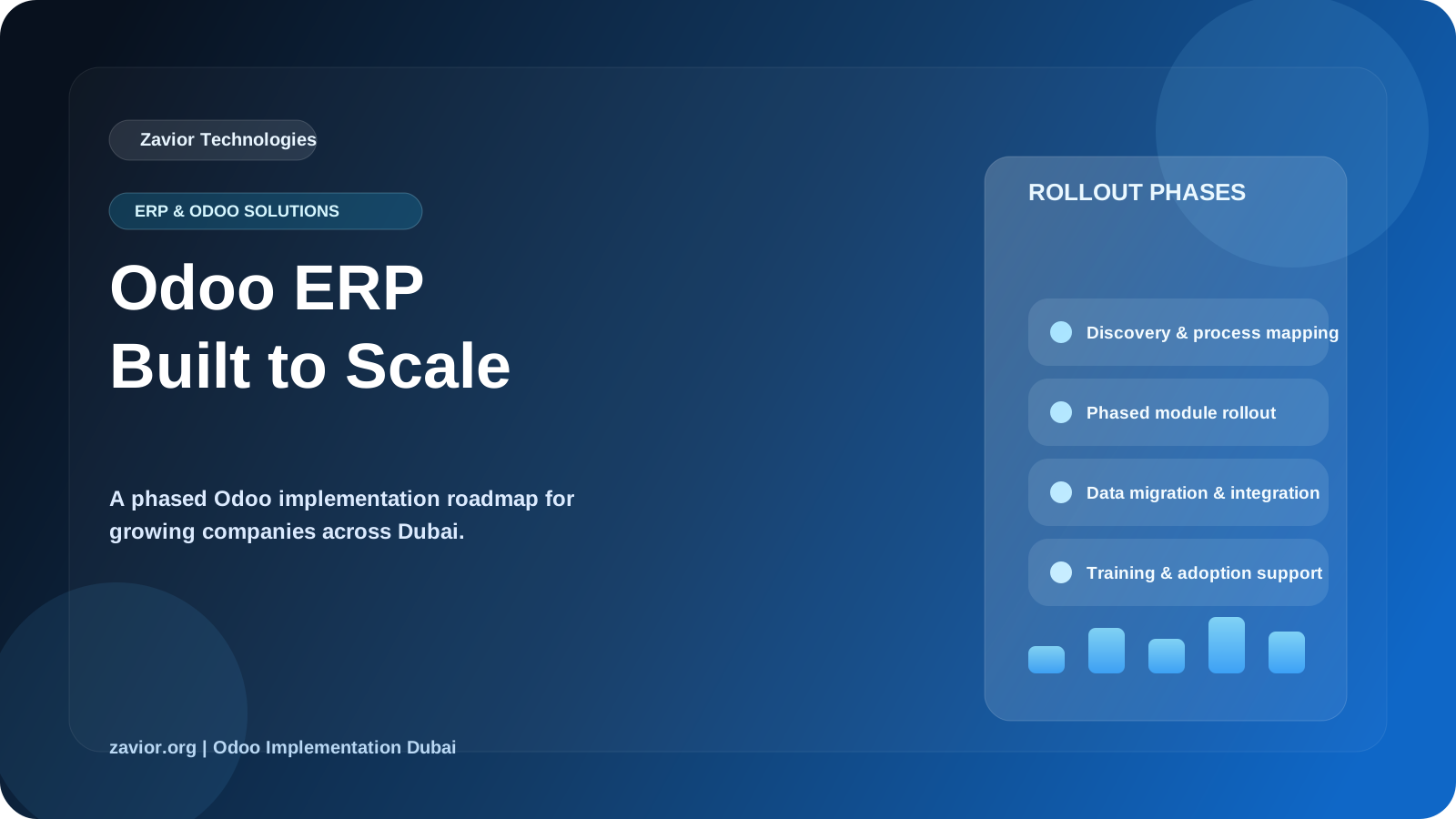
Strong implementations begin with process mapping and requirement validation. Ask how the partner documents scope, identifies gaps, and prioritizes modules for rollout.
3. How Do They Handle Customization?
The best Odoo partners do not customize everything. They know when to use standard modules, when to configure, and when custom development is truly justified. That discipline protects timelines and long-term maintainability.
4. How Will They Manage Data Migration?
Migration quality affects user trust on day one. Ask how they clean legacy data, validate imports, and test opening balances, stock values, customer records, and historical transactions.
5. Can They Integrate with Your Existing Tools?
Many Dubai businesses need ERP connections to e-commerce systems, payment gateways, custom portals, logistics tools, or internal approval flows. The partner should explain how they handle integration architecture and support.
6. What Is Their Training and Change Management Plan?
User adoption is where ERP projects often fail quietly. Ask how they train department teams, support super users, and reinforce process ownership after go-live.
7. How Do They Support UAE Business Requirements?
Your implementation partner should understand the operational realities of UAE businesses, including VAT-ready reporting, multi-company structures, approval controls, and practical local deployment expectations.
8. What Happens After Go-Live?
Support should not end at launch. Ask about hypercare, issue response times, optimization support, and how change requests are governed after the initial rollout.
9. Who Owns Documentation and Knowledge Transfer?
Your internal team should not be dependent on the partner for every small system change. Good partners create documentation, admin guidance, and ownership pathways for your business team.
10. How Will Success Be Measured?
A serious implementation partner should define outcomes beyond "system is live." Ask how they track improvements such as reduced manual work, faster reporting, cleaner stock visibility, better invoice turnaround, or stronger sales pipeline discipline.
Why Businesses Shortlist Zavior Technologies
Companies that work with Zavior Technologies usually want a partner that balances technical capability with practical execution. That means structured discovery, realistic scoping, business-first customization, and a rollout plan that matches how teams actually operate. If that is the type of implementation approach you want, the next step is not a demo. It is a discovery conversation.
You can explore our Odoo ERP services or contact the team directly to discuss your scope, timelines, and integration requirements.
Conclusion
The right Odoo partner helps you simplify operations, reduce rollout risk, and accelerate business value. The wrong one can turn a strong platform into a slow, expensive project. Ask the right questions early and choose a partner that can translate software into operational results.