Every UAE business eventually hits the same wall: growth slows down not because demand disappears, but because manual processes cannot keep up. Approvals sit in someone's inbox, invoices go out late, and the same data gets typed into three different systems. Business process automation removes this ceiling by letting repeatable work run on its own, so people spend time on decisions instead of data entry.
What Business Process Automation Really Means
Automation does not mean replacing staff with software. It means removing the repetitive, rules-based steps from a process, such as forwarding a lead, generating an invoice, or sending a follow-up reminder, so the team only steps in where judgment is actually needed.
High-Impact Areas to Automate First
UAE companies usually see the fastest return by automating a small number of high-friction workflows rather than trying to automate everything at once.
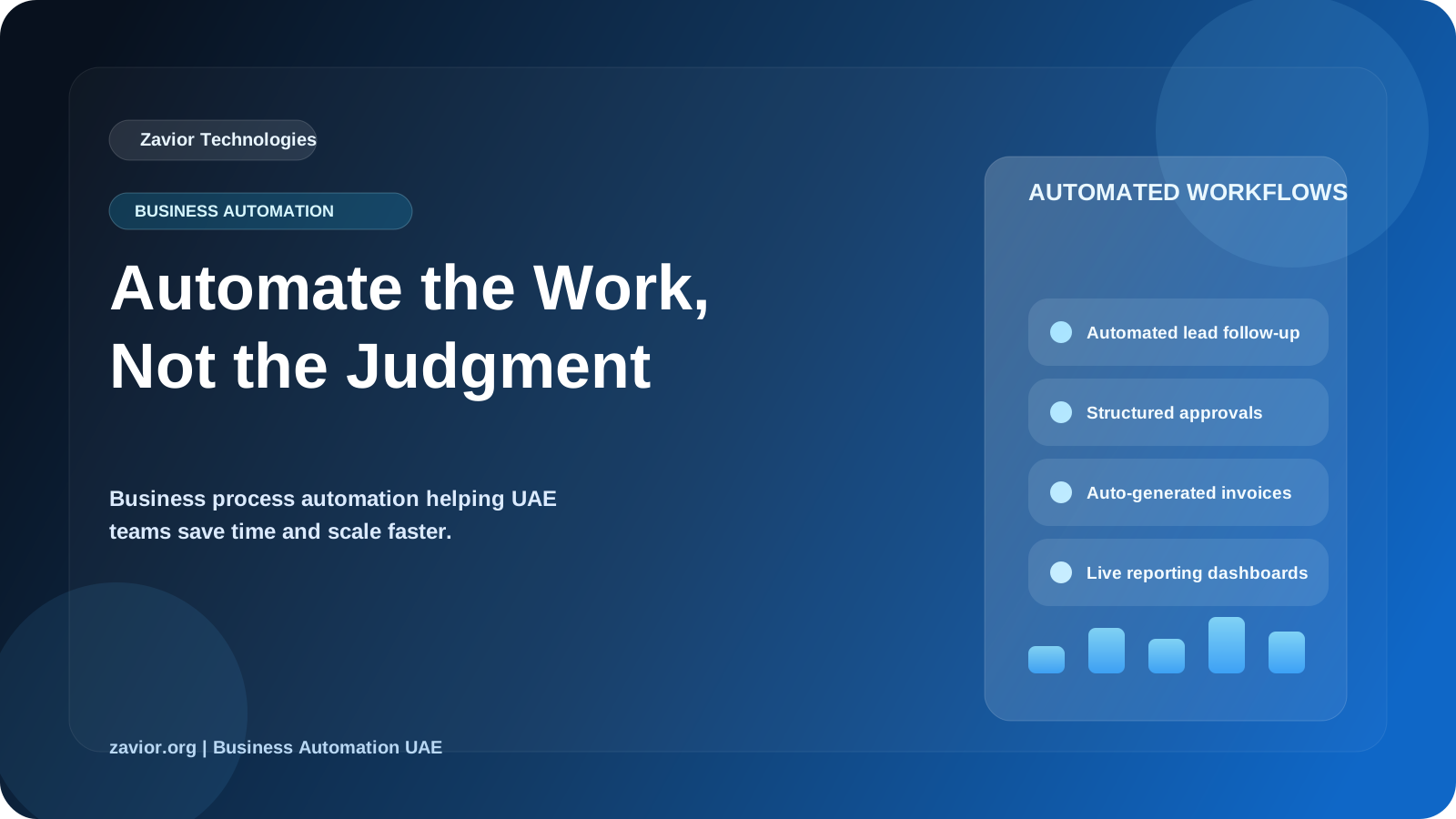
- Lead capture and follow-up: Automatically route new leads to the right sales rep and trigger timely follow-up reminders
- Approvals and purchase orders: Replace email chains with structured, trackable approval workflows
- Invoicing and payment reminders: Generate invoices automatically from confirmed orders and send reminders before payments are overdue
- Reporting: Pull data automatically into dashboards instead of manually compiling spreadsheets each week
Benefits for UAE Companies
- Time savings: Staff spend less time on repetitive administrative tasks and more time on customers and strategy
- Fewer errors: Automated workflows reduce the data-entry mistakes that come from manual re-keying
- Scalability: Automated processes handle higher order or lead volume without a proportional increase in headcount
- Better compliance: Structured workflows leave a clear audit trail, which helps with UAE VAT and regulatory reporting
Tools and Technologies Behind Automation
Most practical automation in the UAE today runs through three complementary approaches:
- ERP-driven automation: Odoo workflows that automatically move a quotation to an invoice, or a purchase request to a supplier order
- AI agents and chatbots: Handling first-line customer queries, qualifying leads, and escalating only what needs a human
- Workflow and integration tools: Connecting different systems, such as a website form, CRM, and accounting software, so data flows between them automatically
How to Start Automating Without Disrupting Operations
The safest starting point is to automate one workflow at a time, measure the impact, and expand from there. Businesses that try to automate everything at once often end up with brittle systems that are hard to maintain. Starting with the workflow that currently causes the most delays or errors, whether that is lead follow-up, invoicing, or reporting, gives the clearest early win.
Our AI automation team builds this kind of workflow and chatbot automation for UAE businesses, and our ERP and Odoo solutions practice handles the underlying process automation inside sales, inventory, and finance. For broader IT groundwork that supports automation, our IT solutions in Dubai team can help as well.
For related reading, see how Odoo and AI automation work together and how UAE SMEs are approaching CRM implementation as part of the same automation push.
Ready to automate the workflows slowing your team down? Contact Zavior Technologies to identify the highest-impact automation opportunities in your business.