Businesses in Dubai and across the UAE need technology that can keep pace with changing customer expectations, growing operations, and increasingly complex workflows. Zavior Technologies helps organizations replace disconnected systems and manual processes with a unified Odoo environment designed around their operational requirements.
Our Odoo ERP Implementation services cover the complete journey from consultation and business analysis to configuration, customization, migration, testing, training, deployment, and ongoing support. We help businesses select the right Odoo modules, connect existing applications, organize their data, and create workflows that improve visibility and operational control.
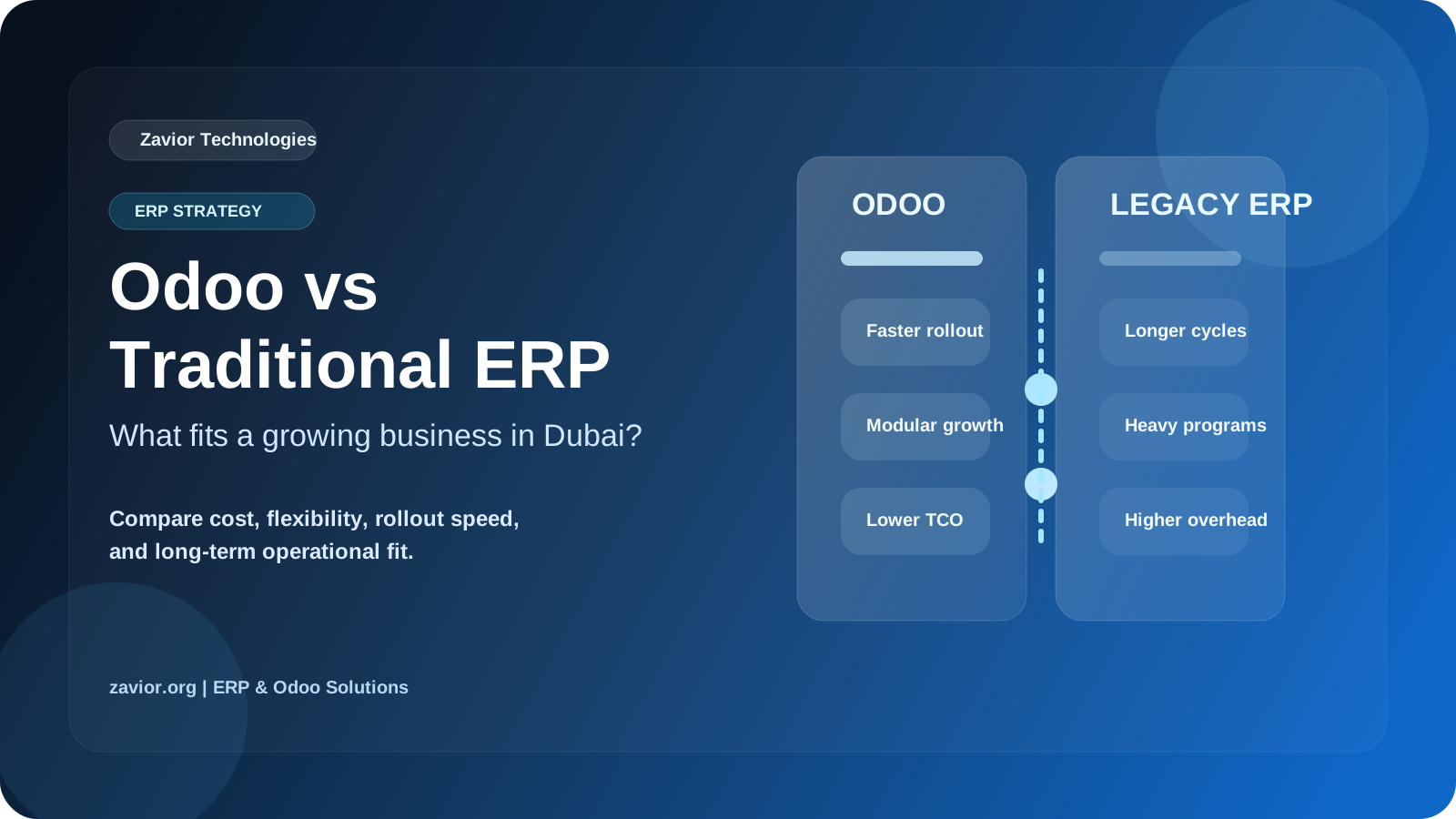
Whether you are replacing a legacy ERP, moving away from spreadsheets, or building a more connected business management system, our team can plan and deliver an Odoo solution aligned with your goals in Dubai and throughout the UAE.
Transform Your Business with Odoo ERP
Odoo brings essential business functions together within one flexible platform. Instead of managing separate applications for sales, accounting, inventory, purchasing, CRM, manufacturing, projects, and customer service, organizations can connect these operations through a centralized system.
At Zavior Technologies, we focus on implementing Odoo around the way your business actually operates. We first understand your existing processes, identify inefficiencies, and determine where standard Odoo functionality can solve the requirement and where configuration, integration, or custom development may be appropriate.
Why Choose Odoo ERP for Your Business?
Odoo is suitable for organizations that want an ERP platform capable of supporting multiple departments without creating unnecessary complexity. Its modular architecture allows businesses to start with the applications they need and expand as their requirements change.
The platform can connect customer management, sales, finance, purchasing, inventory, manufacturing, human resources, projects, websites, eCommerce, and other functions. This helps reduce duplicate data entry and gives management a clearer view of business performance.
For growing companies in Dubai, flexibility is particularly useful. Businesses can configure workflows according to their processes, integrate external systems, and introduce additional modules as operations expand. Odoo can therefore support both immediate operational improvements and longer-term digital transformation.
Business Challenges We Solve
Many businesses struggle with fragmented software, manual approvals, duplicated records, limited reporting, and difficulty tracking operations across departments. These problems can become more noticeable as a company grows.
Zavior helps address challenges such as disconnected sales and accounting systems, inaccurate inventory information, slow purchasing workflows, spreadsheet-dependent reporting, limited customer visibility, and inefficient approval processes.
We also help organizations moving from older ERP platforms manage the transition more systematically. Our approach considers data, users, workflows, integrations, security, and reporting together rather than treating ERP deployment as a software installation alone.
Our Odoo ERP Implementation Services
Odoo Consultation & Discovery
We begin by understanding your business objectives, current technology environment, operational challenges, and expectations. Our consultants discuss your departments, users, workflows, reporting requirements, and future plans before recommending an appropriate Odoo strategy.
Business Process Analysis
Our team reviews existing processes to identify bottlenecks, duplication, manual work, and opportunities for automation. We map important workflows and determine how they can be improved using Odoo while avoiding unnecessary complexity.
Odoo Module Selection
Every organization does not need every Odoo application. We help identify the modules relevant to your business, whether you need CRM and sales, accounting, inventory, manufacturing, purchasing, HR, projects, helpdesk, eCommerce, or other capabilities.
Odoo Configuration & Setup
We configure the Odoo environment according to approved business requirements. This can include company settings, users, roles, access rights, workflows, approval rules, taxes, warehouses, products, pricing, reporting structures, and other operational settings.
Custom Odoo Module Development
When standard functionality does not fully address a genuine business requirement, our developers can create custom modules and features. We prioritize maintainable development so that customization supports the business without making future upgrades unnecessarily difficult.
Third-Party Integrations
Businesses often rely on payment gateways, eCommerce platforms, accounting applications, logistics systems, communication tools, or other third-party software. We connect these systems with Odoo through appropriate APIs and controlled data flows.
Data Migration
Moving from an existing ERP, spreadsheets, or multiple business applications requires careful planning. We help prepare, clean, map, validate, and transfer relevant data while maintaining appropriate controls throughout the migration process.
User Training & Go-Live Support
A successful ERP project depends on user adoption. We provide practical training and documentation to help employees understand their workflows. During launch, our team can provide support to help resolve operational issues and maintain continuity.
Post-Implementation Support & Maintenance
After deployment, we continue to support your system through troubleshooting, updates, performance improvements, configuration changes, security practices, and planned enhancements. Our objective is to help the platform remain useful as your business evolves.
Transform your business with a smarter Odoo ERP solution!
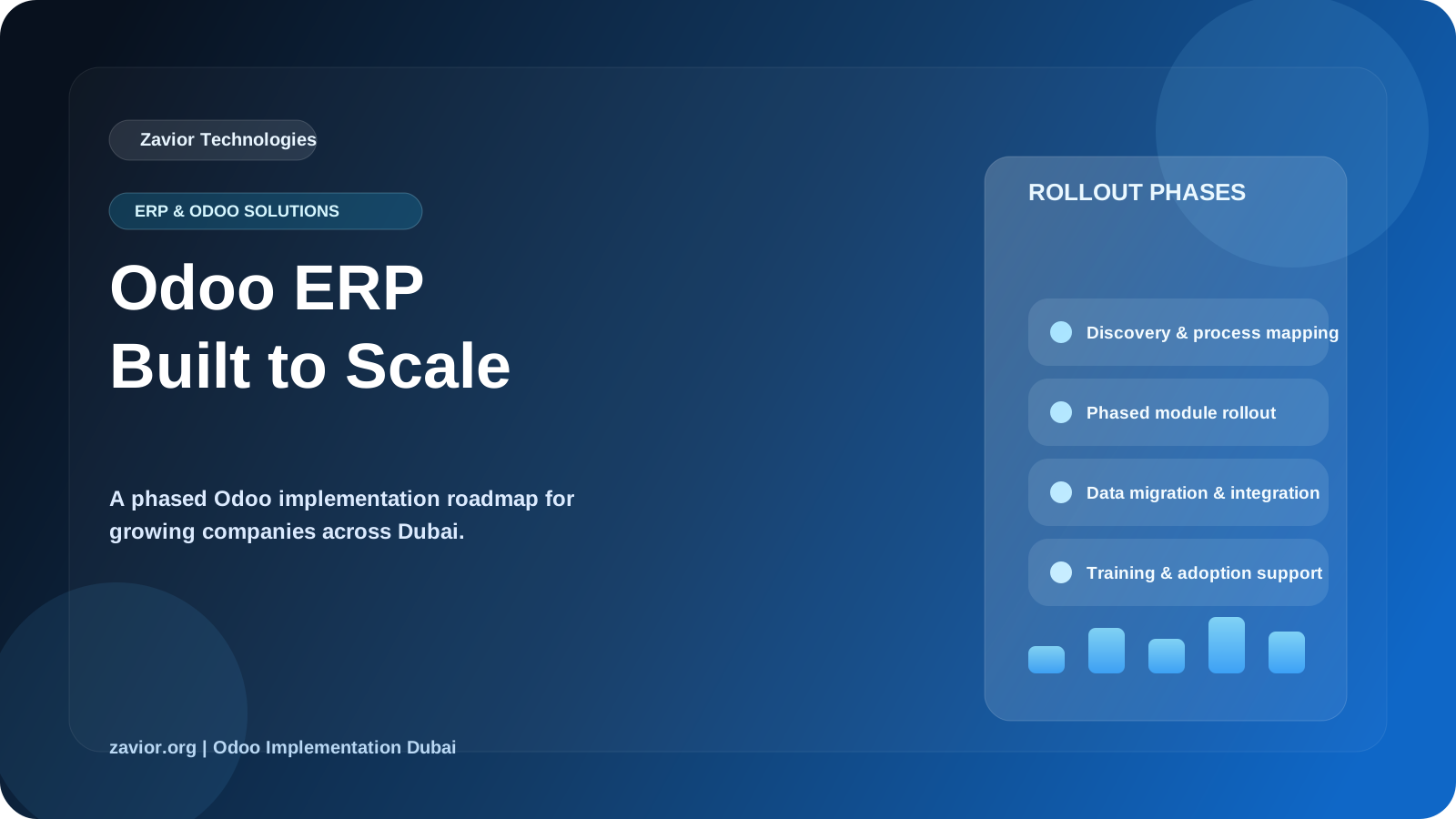
Our Odoo ERP Implementation Process
Discovery & Requirement Gathering
We start with detailed discussions involving relevant stakeholders. We document business objectives, processes, pain points, integrations, reporting requirements, users, and priorities to establish a clear project scope.
Solution Design
We translate the requirements into an ERP solution structure. This includes deciding which Odoo applications will be used, how departments will interact, which workflows should be automated, and where integration or customization is required.
Configuration & Customization
Once the solution design is approved, we configure the Odoo environment and develop agreed custom functionality. Configuration is preferred wherever standard capabilities can meet the requirement effectively.
Data Migration
We prepare the required data, map fields between systems, remove unnecessary or inconsistent records, and perform controlled migration activities. Validation helps ensure that important information is available and usable in the new environment.
Testing & Quality Assurance
Before launch, we test important workflows and business scenarios. Testing can cover sales, purchasing, inventory, accounting, manufacturing, user permissions, integrations, reports, and other processes relevant to the implementation.
Deployment & Go Live
After testing and user readiness activities are completed, we deploy the approved solution. Our team supports the transition and helps address issues that may arise during the initial operational period.
Training & Ongoing Support
Training helps users work confidently with the system, while ongoing support provides assistance after launch. We can continue improving workflows and functionality as new business requirements emerge.
Odoo Modules We Implement
Sales & CRM
Manage leads, opportunities, quotations, customer information, sales activities, and order workflows in one connected environment.
Accounting & Finance
Support invoicing, payments, expenses, financial reporting, customer accounts, vendor accounts, and other finance-related processes.
Inventory & Warehouse
Improve stock visibility, warehouse operations, product tracking, replenishment, transfers, and inventory control.
Purchase Management
Manage suppliers, purchase requests, quotations, purchase orders, receipts, and procurement workflows.
Manufacturing (MRP)
Support manufacturing operations with bills of materials, production orders, work centers, planning, inventory consumption, and production tracking.
Human Resources
Organize employee information, attendance, leave, recruitment, appraisals, and other HR processes through connected applications.
Project Management
Help teams manage projects, tasks, deadlines, timesheets, activities, and project-level visibility.
Helpdesk & Customer Support
Centralize support tickets, customer requests, service activities, assignments, and resolution workflows.
Website & eCommerce
Connect business websites and online stores with products, sales, inventory, customer information, and other ERP functions.
Point of Sale (POS)
Support retail and hospitality operations with point-of-sale workflows connected to products, inventory, customers, and reporting.
Marketing Automation
Automate campaigns, customer communication, lead nurturing, and marketing activities based on defined business workflows.
Industries We Serve
Retail & eCommerce
We help retailers connect sales, inventory, purchasing, customer management, accounting, and online commerce.
Manufacturing
Manufacturers can use Odoo to improve production visibility, material planning, inventory management, procurement, and reporting.
Wholesale & Distribution
Distribution businesses can connect purchasing, warehouses, sales orders, deliveries, customers, suppliers, and finance.
Construction
Construction companies can organize projects, purchasing, resources, documentation, timesheets, and financial processes.
Healthcare
Healthcare organizations can use suitable Odoo applications to improve administrative, financial, customer, purchasing, and operational workflows while considering their specific compliance requirements.
Real Estate
Real estate businesses can manage customer relationships, sales activities, properties, projects, documentation, and related operational processes.
Professional Services
Consultancies and service organizations can connect CRM, proposals, projects, timesheets, invoicing, and customer support.
Education
Educational organizations can streamline administrative operations, communication, finance, employee processes, and other suitable business workflows.
Connect your operations with Odoo!
Why Choose Zavior for Odoo ERP Implementation?
Zavior Technologies takes a business-first approach to ERP delivery. We do not treat every organization as though it needs the same configuration. Instead, we study how your teams work and build the solution around clearly defined requirements.
Our capabilities cover consultation, process analysis, Odoo configuration, custom development, integrations, data migration, testing, deployment, training, and support. This gives businesses a single technology partner across the major stages of their ERP journey.
We also focus on maintainability. Customization is considered where it provides genuine business value, while standard Odoo capabilities are preferred when they can meet the requirement effectively. This helps reduce unnecessary complexity and supports future growth.
As a UAE-based technology company serving Dubai and businesses across the region, we understand the importance of practical implementation, responsive communication, secure systems, and dependable post-launch assistance.
Benefits of Implementing Odoo ERP
A properly planned ERP project can create measurable improvements across business operations. With connected processes and centralized information, organizations can reduce repetitive data entry and improve visibility between departments.
Key benefits can include:
- Centralized business information across departments
- Better visibility into sales, inventory, finance, and operations
- Reduced manual data entry and repetitive administrative work
- More consistent business processes and approval workflows
- Improved reporting and management decision-making
- Better customer and supplier visibility
The exact benefits depend on your existing processes and implementation objectives. Our role is to identify where the platform can create practical operational value rather than introducing technology simply for its own sake.